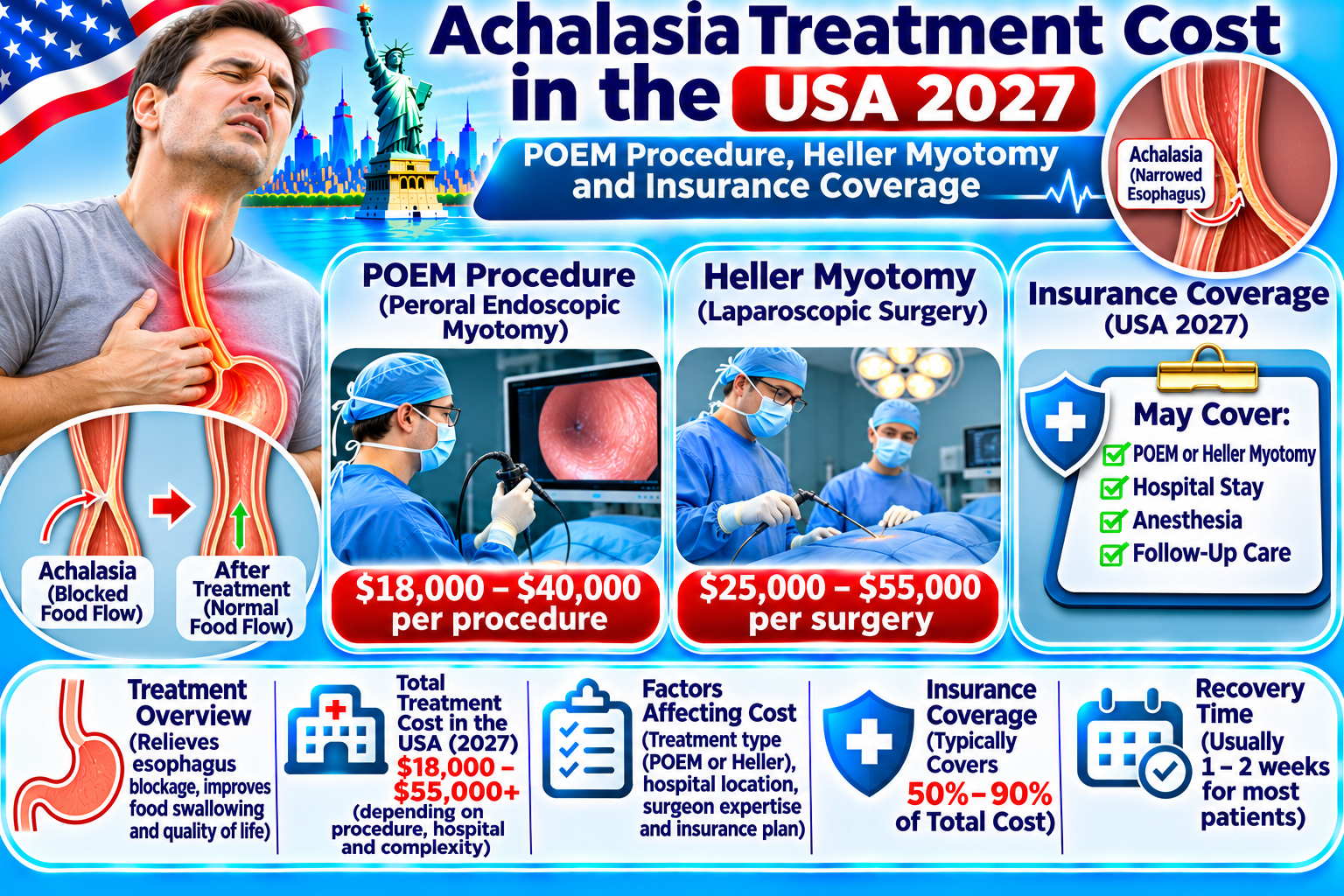
Achalasia is a relatively rare disorder of the esophagus that makes swallowing food and liquids difficult. The condition develops when the lower esophageal sphincter does not relax properly and normal muscular contractions in the esophagus are impaired. Without appropriate treatment, patients may experience worsening swallowing difficulties, regurgitation, weight loss, and reduced quality of life.
Understanding achalasia treatment costs in the USA in 2027 is important for patients comparing peroral endoscopic myotomy (POEM), laparoscopic Heller myotomy, pneumatic dilation, specialist fees, and hospital expenses. The total price depends on the treatment approach, medical facility, insurance benefits, and individual clinical requirements.
Modern achalasia treatment aims to improve the passage of food into the stomach by reducing resistance at the lower esophageal sphincter. Although these procedures can provide substantial symptom relief, they do not restore normal esophageal nerve function.
This comprehensive guide examines estimated achalasia treatment prices in the United States for 2027, including diagnostic testing, endoscopic procedures, surgical fees, health insurance coverage, Medicare benefits, recovery, and long-term management expenses.
What Is Achalasia?
Achalasia is an esophageal motility disorder characterized by impaired relaxation of the lower esophageal sphincter and absent normal peristalsis. Peristalsis refers to the coordinated muscular movements that normally push swallowed food toward the stomach.
When these functions become disrupted, food and liquid may remain in the esophagus instead of moving efficiently into the stomach.
Achalasia can affect adults of different ages and occasionally occurs in children. Its exact cause is often unknown, although damage to nerve cells controlling esophageal movement plays a central role.
Common Symptoms of Achalasia
Symptoms may develop gradually and become more noticeable over time. Common problems include:
- Difficulty swallowing solid food and liquids.
- Regurgitation of undigested food or saliva.
- Chest discomfort or pressure.
- Unintentional weight loss.
- Coughing or choking, particularly at night.
- Heartburn-like symptoms.
- Difficulty maintaining adequate nutrition.
- Recurrent respiratory symptoms related to aspiration.
These symptoms can overlap with other digestive disorders. Persistent or progressive difficulty swallowing requires medical evaluation, particularly when accompanied by weight loss or repeated choking.
Types of Achalasia
Doctors commonly classify achalasia into three subtypes using high-resolution esophageal manometry.
Type I Achalasia
Type I involves absent normal esophageal contractions and limited pressure generation within the esophagus. Treatment options may include POEM, Heller myotomy, or pneumatic dilation.
Type II Achalasia
Type II is associated with panesophageal pressurization during swallowing. Patients often respond well to established treatments that reduce resistance at the lower esophageal sphincter.
Type III Achalasia
Type III involves spastic contractions in addition to impaired sphincter relaxation. POEM may be particularly useful because it can allow a longer, tailored myotomy when clinically appropriate.
Subtype classification helps specialists recommend treatment based on the patient’s physiology rather than symptoms alone.
How Is Achalasia Diagnosed?
Accurate diagnosis is essential before committing to an expensive endoscopic or surgical procedure.
Common diagnostic examinations include:
- Upper gastrointestinal endoscopy to examine the esophagus and stomach.
- High-resolution esophageal manometry to measure muscular activity.
- Timed barium esophagram to assess esophageal emptying.
- Additional imaging or testing when another condition is suspected.
Endoscopy is especially important because tumors or other disorders can sometimes produce symptoms resembling achalasia.
Achalasia Treatment Options in the USA
Peroral Endoscopic Myotomy (POEM)
POEM is a minimally invasive endoscopic procedure performed through the mouth. The specialist creates a tunnel within the esophageal wall and cuts selected muscle fibers to reduce resistance at the lower esophageal sphincter.
Because the procedure does not require external abdominal incisions, patients may experience a relatively short recovery when treatment is uncomplicated.
However, gastroesophageal reflux is an important consideration after POEM. Some patients require acid-suppressing medication and additional monitoring.
Laparoscopic Heller Myotomy
Laparoscopic Heller myotomy involves small abdominal incisions through which the surgeon divides muscle fibers near the lower esophageal sphincter.
The operation is commonly combined with a partial fundoplication, a procedure intended to reduce postoperative acid reflux.
Heller myotomy remains an established treatment option for appropriately selected patients.
Pneumatic Dilation
Pneumatic dilation uses a specialized balloon to stretch and disrupt muscle fibers at the lower esophageal sphincter.
It may be effective for selected patients, although repeat treatment can be necessary. Esophageal perforation is an uncommon but important potential complication.
Botulinum Toxin Injection
Botulinum toxin may be injected into the lower esophageal sphincter to temporarily reduce muscle resistance.
Because its effect often diminishes over time, this treatment is generally considered for patients who are unsuitable for more durable interventions.
Achalasia Treatment Cost in the USA in 2027
The total price of achalasia treatment depends on the procedure, specialist experience, hospital resources, anesthesia, diagnostic testing, and postoperative care.
The following figures are illustrative 2027 financial planning ranges. They are not verified national averages, guaranteed provider quotations, or predictions of insurance reimbursement.
Estimated USA Cost Breakdown
| Treatment or Service | Estimated Cost (USD) |
|---|---|
| Gastroenterologist Consultation | $150–$500+ |
| Upper GI Endoscopy | $800–$3,500+ |
| High-Resolution Manometry | $700–$2,500+ |
| Barium Swallow Examination | $250–$1,200+ |
| POEM Procedure With Facility Care | $12,000–$30,000+ |
| Laparoscopic Heller Myotomy | $15,000–$40,000+ |
| Pneumatic Dilation | $2,500–$8,000+ |
| Botulinum Toxin Treatment | $1,500–$5,000+ |
| Anesthesia Professional Charges | $500–$2,500+ if separate |
| Postoperative Specialist Visit | $100–$400+ if separate |
Important: These are hypothetical budgeting ranges. Procedure quotations may already include physician, anesthesia, and facility charges. Patients should confirm included services before combining separate amounts.
USA Achalasia Treatment Cost Comparison
Because this article focuses on the United States, the following table compares treatment approaches within the American healthcare system rather than different countries.
| USA Treatment Scenario | Illustrative Total Budget |
|---|---|
| Pneumatic Dilation | $2,500–$8,000+ |
| POEM Procedure | $12,000–$30,000+ |
| Heller Myotomy With Fundoplication | $15,000–$40,000+ |
| Complex or Repeat Intervention | $20,000–$50,000+ |
These broad planning figures are not evidence that one procedure is always cheaper than another. Published comparisons have found variable cost differences depending on the hospital and accounting method.
POEM Procedure Cost in the USA
POEM requires specialized endoscopic equipment, an experienced therapeutic endoscopist, anesthesia, and appropriate postoperative observation.
Costs may vary according to the length of the myotomy, facility charges, and whether complications or additional testing occur.
Patients should request a complete written estimate identifying physician fees, anesthesia, hospital charges, and follow-up services.
Heller Myotomy Surgery Cost
Heller myotomy usually involves operating room services, surgical instruments, anesthesia, and recovery monitoring.
When a fundoplication is performed during the same operation, its cost may be included in the overall surgical package rather than billed as an unrelated procedure.
The final price depends on surgeon experience, hospital setting, medical complexity, and insurance arrangements.
POEM vs Heller Myotomy: Cost and Treatment Comparison
POEM and laparoscopic Heller myotomy are established treatments for achalasia. Both aim to improve swallowing by reducing pressure at the lower esophageal sphincter, but they use different techniques.
POEM is performed through the mouth using an endoscope, while Heller myotomy involves laparoscopic abdominal surgery, commonly combined with fundoplication.
POEM may be particularly suitable for certain patients with type III achalasia because the specialist can perform a longer myotomy when necessary.
Heller myotomy with fundoplication may offer an advantage in controlling postoperative acid reflux for some patients.
Current clinical recommendations emphasize individualized treatment decisions rather than choosing a procedure based on price alone.
Achalasia Treatment With Health Insurance
Many comprehensive health insurance plans cover medically necessary achalasia treatment when diagnostic findings and clinical documentation satisfy policy requirements.
Coverage may include POEM, Heller myotomy, pneumatic dilation, and medically necessary diagnostic examinations.
However, approval does not necessarily eliminate patient expenses. Deductibles, copayments, coinsurance, and noncovered services may still apply.
Important insurance considerations include:
- Annual deductible and out-of-pocket maximum.
- Gastroenterologist and surgeon network participation.
- Prior authorization for POEM or surgical myotomy.
- Coverage for esophageal manometry and endoscopy.
- Hospital outpatient or inpatient benefits.
- Anesthesia provider network participation.
- Coverage for reflux medications and follow-up testing.
- Benefits for repeat procedures when medically necessary.
Patients should contact their insurer before elective treatment and request written clarification of applicable coverage requirements.
Medicare Coverage for Achalasia Treatment
Original Medicare may cover medically necessary achalasia treatment when applicable requirements are satisfied.
Medicare Part B generally covers eligible outpatient physician services, diagnostic examinations, and qualifying outpatient procedures. Part A generally applies to covered inpatient hospital admissions.
Medicare coverage for POEM can depend on applicable local coverage policies, documentation, and medical necessity criteria.
For many covered Part B services, beneficiaries pay 20% of the Medicare-approved amount after meeting the applicable deductible. Hospital outpatient cost-sharing may differ.
Medicare Advantage plans may have separate provider networks, authorization requirements, and payment arrangements.
Medicaid and Financial Assistance
Medicaid may cover medically necessary achalasia treatment for eligible individuals, depending on state-specific requirements and participating providers.
Some nonprofit hospitals offer financial assistance to qualifying patients. Financial counselors may explain eligibility requirements, payment arrangements, and available support programs.
Patients should confirm whether assistance applies to both facility and separately billed physician services.
Achalasia Treatment Without Insurance
Uninsured patients may be responsible for the full cost of specialist consultations, diagnostic examinations, treatment procedures, anesthesia, and postoperative monitoring.
Before accepting a self-pay quotation, patients should ask:
- Does the estimate include the specialist’s professional fee?
- Are anesthesia and facility charges included?
- Does the price cover overnight observation if needed?
- Are postoperative imaging or endoscopy included?
- Will reflux medications be billed separately?
- What additional charges could arise from complications?
Written estimates help patients compare qualified treatment centers without overlooking important medical expenses.
Factors Influencing Achalasia Treatment Prices
1. Type and Severity of Achalasia
Patients with advanced esophageal changes or complex motility abnormalities may require more specialized treatment planning.
2. Treatment Technique
POEM, Heller myotomy, pneumatic dilation, and botulinum toxin injection use different equipment and medical resources.
3. Hospital and Facility Charges
Operating room expenses, endoscopy equipment, nursing care, and hospitalization requirements affect total treatment costs.
4. Specialist Experience
Highly specialized procedures require appropriately trained gastroenterologists or surgeons. Professional fees may vary between facilities.
5. Insurance Coverage
Deductibles, coinsurance, network restrictions, and negotiated reimbursement rates directly affect personal financial responsibility.
6. Geographic Location
Healthcare prices vary across American cities and states because of regional operating expenses and insurance contracts.
7. Repeat Procedures and Complications
Persistent symptoms, reflux, or treatment complications may require additional testing, medication, or repeat intervention.
Anesthesia and Hospital Expenses
POEM and Heller myotomy are generally performed under general anesthesia. Pneumatic dilation also requires appropriate sedation or anesthesia according to clinical circumstances.
Anesthesia costs depend on procedure duration, patient health, and billing arrangements.
Hospital expenses may include specialized equipment, medications, recovery monitoring, and additional examinations.
Patients should confirm whether these charges are included in the procedure estimate.
Recovery After POEM
Patients commonly undergo observation after POEM, with the length of stay determined by the hospital’s protocol and individual recovery.
Diet is gradually advanced according to the treating specialist’s instructions. Temporary dietary restrictions may help protect healing tissue.
Patients should follow prescribed medication instructions and report concerning symptoms promptly.
Although many individuals resume routine activities relatively quickly, recovery timelines vary.
Recovery After Heller Myotomy
Recovery after laparoscopic Heller myotomy depends on surgical complexity, medical conditions, and whether additional procedures were performed.
Patients may experience temporary abdominal soreness, fatigue, and swallowing adjustments during early recovery.
Dietary progression and activity restrictions should follow the surgeon’s individualized instructions.
Additional expenses may include medications, transportation, time away from work, and follow-up consultations.
Acid Reflux After Achalasia Treatment
Gastroesophageal reflux is an important long-term consideration after treatment that reduces lower esophageal sphincter pressure.
Patients undergoing POEM may require proton pump inhibitors or other appropriate reflux management.
Some patients need additional evaluation even without typical heartburn symptoms because acid exposure can occur silently.
Heller myotomy is commonly combined with fundoplication to reduce reflux risk, although reflux can still develop.
Long-term medication and testing expenses should be included in financial planning when clinically indicated.
Possible Complications and Additional Costs
Achalasia procedures are generally effective in appropriately selected patients, but complications can occur.
Potential problems include bleeding, esophageal perforation, infection, reflux, or persistent swallowing difficulties.
Some patients require additional imaging, hospitalization, endoscopic treatment, or repeat procedures.
These possibilities can increase overall medical spending beyond the initial quotation.
Long-Term Follow-Up and Treatment Results
Many patients experience substantial improvement in swallowing after successful achalasia treatment.
However, symptoms can recur, and some individuals require further intervention over time.
Follow-up care may include symptom assessment, nutritional monitoring, endoscopy, or additional esophageal testing.
Patients should report recurrent difficulty swallowing, unexplained weight loss, or persistent regurgitation rather than assuming these symptoms are normal.
How to Reduce Achalasia Treatment Costs
Patients can manage expenses while prioritizing appropriate medical care.
- Confirm insurance coverage before planned treatment.
- Request complete written procedure estimates.
- Compare qualified hospitals and treatment centers.
- Verify specialist and anesthesia network participation.
- Ask whether diagnostic tests are included.
- Review long-term reflux medication benefits.
- Explore eligible hospital financial assistance.
- Discuss all medically appropriate treatment options.
The least expensive procedure is not automatically the best choice. Treatment effectiveness, specialist experience, reflux risk, and long-term outcomes should guide decisions.
Frequently Asked Questions
How much does achalasia treatment cost in the USA in 2027?
Illustrative costs may range from approximately $12,000 to $30,000 or more for POEM and $15,000 to $40,000 or more for Heller myotomy. Actual prices vary substantially.
Is POEM cheaper than Heller myotomy?
Not necessarily. Published studies have reported varying cost differences. Facility charges, length of stay, and insurance contracts influence the comparison.
Does insurance cover POEM?
Many insurance plans may cover medically necessary POEM when diagnostic findings satisfy the policy’s requirements. Prior authorization may be necessary.
Does Medicare cover achalasia surgery?
Medicare may cover qualifying medically necessary treatment, subject to applicable national or local coverage requirements and cost-sharing rules.
Is achalasia permanently cured by surgery?
Treatment can provide lasting symptom relief, but it does not restore normal esophageal nerve function. Some patients experience recurrent symptoms.
Which treatment is best for type III achalasia?
POEM is often favored for appropriately selected patients with type III achalasia because it permits a longer myotomy. Individual assessment remains essential.
How long is recovery after POEM?
Recovery varies, but many patients gradually resume routine activities relatively soon after an uncomplicated procedure, following their specialist’s instructions.
Can achalasia be treated without surgery?
Yes. Pneumatic dilation and selected endoscopic treatments are available. The most appropriate option depends on achalasia subtype, medical fitness, and patient preferences.
Conclusion
Achalasia treatment costs in the USA in 2027 depend on POEM, Heller myotomy, pneumatic dilation, specialist fees, anesthesia, hospital expenses, and insurance coverage.
POEM and Heller myotomy are established treatments, while pneumatic dilation and other interventions may be appropriate for selected patients.
Patients should obtain itemized estimates, confirm insurance benefits, and consult experienced esophageal specialists to choose an effective treatment with manageable financial responsibilities.
Medical Disclaimer: This article provides general educational and financial planning information only. It does not replace professional medical advice, diagnosis, or treatment. All 2027 prices are illustrative estimates and should be verified directly with healthcare providers, hospitals, and insurance companies.
