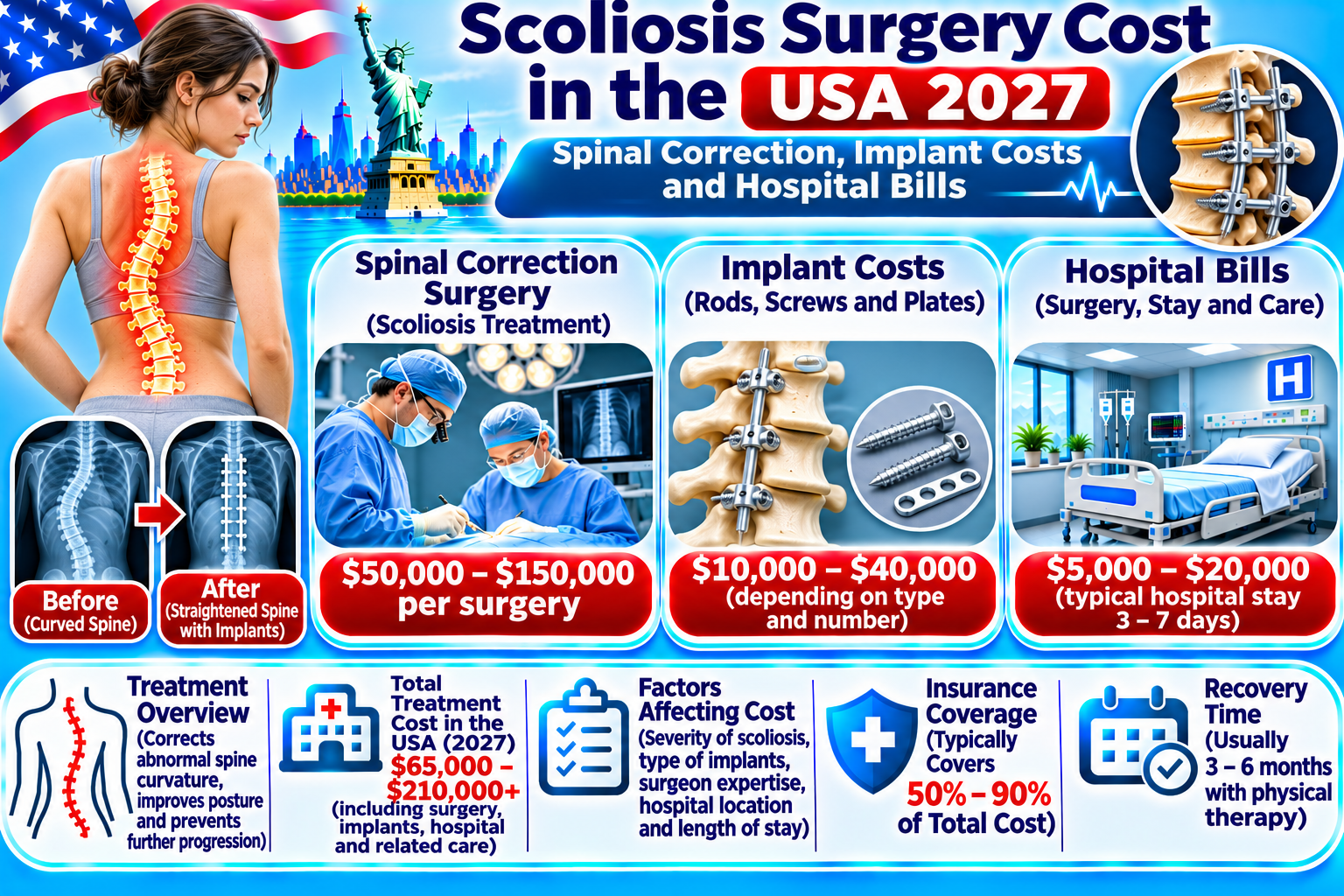
Scoliosis surgery is a specialized spinal procedure performed to correct certain abnormal curves of the spine and reduce the risk of further deformity. Scoliosis affects children, teenagers, and adults, although treatment decisions depend on the patient’s age, spinal curvature, symptoms, and overall health.
Understanding scoliosis surgery costs in the USA in 2027 is important for patients comparing spinal fusion, orthopedic surgeon fees, spinal implants, anesthesia, and hospital expenses. Surgery can involve several days of hospitalization and substantial medical resources, making financial planning an important part of treatment preparation.
Not everyone with scoliosis requires surgery. Many patients are monitored regularly or receive bracing and other nonsurgical care. Surgery is generally considered when the spinal curve is severe, continues to progress, or causes significant clinical problems.
This guide explains estimated scoliosis treatment prices in the United States for 2027, including spinal correction procedures, titanium rods, pedicle screws, hospital bills, insurance coverage, rehabilitation, and recovery expenses.
What Is Scoliosis?
Scoliosis is a three-dimensional spinal deformity commonly identified by an abnormal sideways curvature and rotation of the spine. Doctors generally diagnose scoliosis when the Cobb angle measures at least 10 degrees on an appropriate spinal X-ray.
The condition can develop for different reasons, including adolescent idiopathic scoliosis, congenital spinal abnormalities, neuromuscular conditions, and degenerative changes in adulthood.
Common signs and symptoms include:
- Uneven shoulders or waistline.
- One shoulder blade appearing more prominent.
- Uneven hips or changes in posture.
- A noticeable rib prominence when bending forward.
- Back discomfort in some patients.
- Changes in balance or walking ability.
- Reduced physical function in selected severe cases.
Many adolescents with scoliosis experience little or no pain. Adult scoliosis may be associated with back pain, nerve compression, or other degenerative spinal conditions.
When Is Scoliosis Surgery Necessary?
Surgery may be considered for adolescents with severe or progressing curves, often around 45 to 50 degrees or greater, depending on skeletal maturity and individual circumstances.
For adults, decisions may involve persistent pain, neurological symptoms, spinal imbalance, progressive deformity, and response to nonsurgical treatment.
Spinal surgery is not automatically recommended because of a particular X-ray measurement. The surgeon must evaluate symptoms, medical risks, and realistic treatment goals.
Types of Scoliosis Surgery
Posterior Spinal Fusion
Posterior spinal fusion is a common operation for correcting significant scoliosis. The surgeon approaches the spine from the back and uses implants to improve alignment while bone graft material promotes fusion between selected vertebrae.
Anterior Spinal Fusion
Anterior surgery approaches the spine from the front or side of the body. It may be appropriate for selected spinal curves, although surgical indications and techniques vary.
Vertebral Body Tethering
Vertebral body tethering is a motion-preserving option for carefully selected growing patients. It uses specialized implants and has different eligibility criteria, risks, and long-term considerations from spinal fusion.
Complex Adult Spinal Deformity Correction
Adults with significant spinal imbalance or degenerative changes may require extensive fusion, decompression, or corrective bone procedures.
These operations can involve longer operating times and greater hospital expenses than less extensive adolescent procedures.
Scoliosis Surgery Cost in the USA in 2027
The total cost of scoliosis surgery depends on the number of spinal levels treated, implant selection, surgical complexity, hospital stay, anesthesia, and postoperative care.
Published American research shows substantial variation in spinal deformity surgery costs. Hospital facility expenses and implants can represent major portions of overall spending.
The following 2027 figures are illustrative budgeting ranges, not verified national averages, guaranteed prices, or insurance reimbursement amounts.
Estimated USA Cost Breakdown
| Treatment or Service | Estimated Cost (USD) |
|---|---|
| Spine Specialist Consultation | $200–$600+ |
| Standing Spinal X-Rays | $150–$700+ |
| Spinal MRI | $500–$2,500+ |
| Standard Spinal Fusion for Scoliosis | $70,000–$160,000+ |
| Complex Adult Deformity Correction | $100,000–$250,000+ |
| Spinal Implant Materials | $10,000–$40,000+ as a cost component |
| Surgeon Professional Fees | $5,000–$20,000+ as a cost component |
| Anesthesia Professional Fees | $2,000–$7,000+ as a cost component |
| Physical Therapy Session | $75–$250+ |
Important: These are broad hypothetical 2027 planning estimates. Implant, surgeon, and anesthesia expenses may already be included in a complete surgery quotation. Patients should not add overlapping charges.
USA Scoliosis Surgery Cost Comparison
Because this article focuses on the United States, the following table compares American treatment scenarios rather than different countries.
| USA Treatment Scenario | Illustrative Total Budget |
|---|---|
| Standard Adolescent Spinal Fusion | $70,000–$160,000+ |
| Extensive Multilevel Fusion | $100,000–$200,000+ |
| Complex Adult Spinal Correction | $100,000–$250,000+ |
| Revision Surgery With Complications | $120,000–$300,000+ |
Actual hospital charges, negotiated payments, and patient out-of-pocket expenses can differ greatly. Complex cases may exceed these illustrative amounts.
Spinal Implant Costs
Spinal fusion commonly uses metal rods, screws, hooks, connectors, and bone graft materials to stabilize the corrected spine.
Implant expenses depend on the number of vertebrae treated, fixation requirements, device selection, and surgical technique.
Some implants are made from titanium alloys or other medical-grade materials. The surgeon selects appropriate instrumentation based on the patient’s anatomy and treatment goals.
Implant costs are frequently included in hospital facility billing rather than charged as a separate retail purchase.
Hospital Bills for Spinal Correction Surgery
Hospital expenses may include operating room services, inpatient accommodation, nursing care, laboratory testing, medications, and postoperative monitoring.
Some patients require intensive monitoring or a longer hospital stay because of surgical complexity or medical complications.
Hospitalization length can substantially affect the final bill, particularly when additional procedures or specialized care become necessary.
Scoliosis Surgery With Health Insurance
Many comprehensive health insurance plans cover medically necessary scoliosis surgery when the patient’s condition satisfies clinical and policy requirements.
However, insurance approval does not mean every expense will be paid in full. Patients may remain responsible for deductibles, copayments, coinsurance, and noncovered services.
Important insurance considerations include:
- Annual deductible and out-of-pocket maximum.
- Spine surgeon and hospital network participation.
- Prior authorization for spinal fusion.
- Coverage for spinal implants and bone graft materials.
- Anesthesia and neuromonitoring benefits.
- Hospitalization and intensive care coverage.
- Postoperative rehabilitation benefits.
- Coverage for follow-up imaging and medications.
Families should request a personalized insurance estimate before surgery and confirm whether all involved medical professionals participate in the plan’s network.
Medicare Coverage for Scoliosis Surgery
Original Medicare may cover medically necessary spinal correction surgery when applicable requirements are satisfied.
Medicare Part A generally applies to qualifying inpatient hospital admissions, while Part B commonly covers eligible physician services, diagnostic tests, and outpatient care.
For many covered Part B services, beneficiaries pay 20% of the Medicare-approved amount after meeting the applicable deductible. Inpatient hospital cost-sharing follows separate rules.
Medicare Advantage plans may have different authorization requirements, provider networks, and patient payment arrangements.
Medicaid and Financial Assistance
Medicaid may cover medically necessary scoliosis surgery for eligible children and adults, subject to state-specific requirements.
Some hospitals provide financial assistance to qualifying patients and families. Financial counselors can explain eligibility, billing arrangements, and available support programs.
Scoliosis Surgery Without Insurance
Uninsured patients may face substantial direct expenses because spinal correction often requires extensive instrumentation, specialized surgical teams, and inpatient hospitalization.
Before accepting a quotation, patients should ask:
- Are surgeon and anesthesia fees included?
- Does the estimate include spinal implants?
- How many hospital days are covered?
- Are neuromonitoring services included?
- Will postoperative imaging be billed separately?
- What additional charges apply if complications occur?
A written estimate helps patients distinguish between the hospital’s advertised charges and the complete expected cost of care.
Factors Influencing Scoliosis Surgery Prices
1. Severity of Spinal Curvature
Severe or complex deformities may require more extensive correction, longer procedures, and additional medical resources.
2. Number of Vertebrae Fused
Longer spinal fusion procedures generally require more implants, bone graft material, and operating room time.
3. Implant Selection
Different fixation systems, rods, screws, and graft materials can influence hospital expenses.
4. Hospital and Surgeon Fees
Specialized spine centers may have different professional fees, facility charges, and care arrangements.
5. Insurance Coverage
Deductibles, coinsurance, negotiated rates, and provider network restrictions directly affect patient expenses.
6. Geographic Location
Healthcare costs vary across American cities and states because of differences in hospital operating expenses and insurance contracts.
7. Complications and Hospitalization
Unexpected complications, additional procedures, or prolonged hospital stays can substantially increase total treatment spending.
Anesthesia and Neuromonitoring Expenses
Scoliosis correction is generally performed under general anesthesia. The anesthesia team monitors breathing, circulation, and other vital functions throughout surgery.
Intraoperative neuromonitoring is frequently used to assess nervous system function during spinal correction.
These specialized services may appear as separate professional charges or be included within a comprehensive hospital payment arrangement.
Recovery After Scoliosis Surgery
Recovery depends on the patient’s age, surgical technique, number of fused vertebrae, and overall health.
Patients commonly begin carefully supervised movement during hospitalization. Pain management and gradual walking are important parts of early recovery.
Return to school, work, sports, and strenuous activities follows an individualized schedule established by the surgical team.
Bone fusion develops over time, so activity restrictions may continue for several months.
Physical Therapy and Rehabilitation Costs
Some patients benefit from supervised rehabilitation after scoliosis surgery, while others follow a surgeon-directed home activity program.
Physical therapy may focus on mobility, posture, conditioning, and a safe return to normal activities.
Illustrative outpatient therapy costs may range from $75 to $250 or more per appointment before insurance adjustments.
The number of sessions depends on individual recovery needs rather than a universal treatment schedule.
Possible Complications and Additional Costs
Spinal correction surgery involves potential risks, including infection, bleeding, nerve injury, blood clots, implant problems, and failure of bone fusion.
Some patients may require additional imaging, medication, rehabilitation, or revision surgery.
These complications can increase both direct medical expenses and indirect costs associated with extended recovery.
How to Reduce Scoliosis Surgery Costs
Patients and families can manage expenses while prioritizing appropriate medical care.
- Verify insurance coverage before scheduling surgery.
- Request complete written hospital estimates.
- Confirm surgeon and anesthesia network participation.
- Ask whether implant costs are included.
- Review expected hospitalization expenses.
- Explore eligible hospital financial assistance.
- Clarify postoperative rehabilitation benefits.
- Discuss medically appropriate nonsurgical options.
The lowest-priced operation is not necessarily the safest choice. Surgeon expertise, specialized hospital resources, and individualized treatment planning remain essential.
Frequently Asked Questions
How much does scoliosis surgery cost in the USA in 2027?
Illustrative costs may range from approximately $70,000 to $160,000 or more for standard spinal fusion. Complex adult reconstruction may cost substantially more.
How much do spinal implants cost?
Implant-related expenses vary according to the number of treated vertebrae and the fixation system. These costs are frequently included in the overall hospital bill.
Does health insurance cover scoliosis surgery?
Many plans cover medically necessary spinal correction, subject to clinical criteria, authorization requirements, and patient cost-sharing.
Does Medicare cover scoliosis surgery?
Medicare may cover qualifying medically necessary spinal procedures under applicable inpatient or outpatient benefits.
How long does recovery take?
Recovery varies considerably. Many patients gradually resume routine activities over several weeks or months, while complete fusion and return to demanding activities may take longer.
Can scoliosis be treated without surgery?
Yes. Observation, bracing for selected growing patients, and other nonsurgical measures may be appropriate depending on the curve and clinical circumstances.
Conclusion
Scoliosis surgery costs in the USA in 2027 depend on spinal correction complexity, implant materials, surgeon fees, anesthesia, hospital bills, and insurance coverage.
Standard spinal fusion can involve substantial medical spending, while complex adult deformity reconstruction or revision surgery may create even greater expenses.
Patients should obtain itemized estimates, verify insurance benefits, and consult experienced spine specialists before making treatment decisions.
Medical Disclaimer: This article provides general educational and financial planning information only. It does not replace professional medical advice, diagnosis, or treatment. All 2027 prices are illustrative estimates and should be verified directly with healthcare providers, hospitals, and insurance companies.
